Pleasing God: A Paradigm Shift (Part 3)

This is Part 3 of a series of posts. Please go back here, then here, read the first two parts before continuing on here. 

I am a recovering perfectionist  - handwriting on a napkin with

What are the disadvantages of holding tightly to unrealistic expectations of idealism and perfection?

1) We deny ourselves the ability to align ourselves with what God is doing in our life right now. If we set perfection and idealism as our ultimate goal, we will lack contentment for anything less. How can we be content with our little house, if our idealism wants us in a bigger house? How can we be content with our husband and our marriage, if our idealism wants a completely different picture of what marriage looks like so that we’re always trying to improve our spouse? How can we be content with our imperfect children if we are never happy with them because they continue to misbehave? How can we be content with our Savior’s sacrifice for us, if our idealism demands that our goodness should be perfect and sinless before God?

2) If we set perfection and idealism as our ultimate goal, we will miss the joy in the now. If we’re a mountain climber and our only joy is getting to the the top of Mt. Rainier as the ultimate fulfillment of our dream, we may very well miss the wildflowers along the way. We may miss the beautiful tranquil streams in the valleys. And so on. If we lack contentment with where God has us right now, we will miss the joy of a husband who may be imperfect but may deeply love us. We will miss the joy of being able to enjoy our little imperfect rugrats. We will miss the joy of the simplicity of a home that doesn’t require as much maintenance as a big house. You get the idea.

3) Do you know the phrase, “if you live by the sword, you will die by the sword?” It means that whatever standard you set for your life, will be the very standard that will one day condemn you or at least imprison you. If our standard is perfection, we will fail every time we aren’t perfect. 

4) Perfectionism and idealism are exhausting. Are there things in life that we can set our mind to and achieve? Sure! But whatever ideals and perfections we set our hearts on achieving will require every last drop of your energy. We will end up enslaved to the chase of that ideal. So, we need to ask ourselves, is that worth giving our lives to? Is it worth the exhaustion? Is it worth the enslavement to continually chase that perfect goal? Do you feel that increases your freedom or enslaves you?

5) Another disadvantage of holding tightly to an unrealistic expectation of ourselves is that we ultimately refuse to agree with God about our current condition. Rather than embracing the thought, “You’re right about me, God. I really am an imperfect sinner who is desperate for You, God.” We claim instead that we CAN still perfect ourselves; we just always need one more chance to prove ourselves.

When you insist that we can do something OURSELVES, it pushes others away. So, in essence, if we are impatient with ourselves and become irritated when we aren’t spiritually perfect, we also push God away, denying Him being welcomed into our sin situation because we’ll refuse His help. We’ll refuse the mercy and grace God is trying to give us now.  Humble contrite surrender throws open the door to His mercy and grace! “I can do it myself” pushes Him away! If we aren’t careful, our self-reliance will end up opposing God because self-reliance is prideful and God says He will oppose prideful ways.

6) The tighter we hold on to this need to perform, to do everything right, to do everything well, to achieve all our dreams and ideals, the less we’ll become dependent on Jesus. That chase will consume us. And the more we are consumed with the ideals, the less we’ll be satisfied with our life and our current situation. We’ll also be less satisfied with our relationship with Jesus because, ultimately, when we are consumed with this perfectionist drive, we’ll become less dependent on Jesus.

7) Here’s another really important point: If we aren’t careful, we will adamantly refuse to allow God to give our lives an alternate ending, a different calling for us which is by His design. Listen, if God does not want us to achieve our own goals, if He has something special He wants to accomplish with our weakness, (with our imperfection), He will oppose our plans so that He can use us how he wants to use us. This isn’t unkindness! In fact, this is great love and kindness. He has a special purpose for our lives! Are we willing to give Him control of that future? 

I know! He gave me depression for 12 years. I have to stop and clarify here! God is always for YOU! You, the person. But He may throw a monkey wrench into your plans (He may oppose your ways) if they don’t please Him or glorify Him. There are endings in some of our lives that God deeply desires to come to pass because those frailties and those weaknesses will open the door to a way He has planned to glorify Himself with our lives. 

What are the benefits of letting go of perfectionism and performancism? 

  • It lets us recognize and embrace the little wins typically insufficient for a perfectionist.
  • It lets us breathe in a breath of contentment and breeds gratefulness for the life God has given us.
  • This will give us more energy for the ones we love and more patience with them.
  • Letting go, although frightening at first, actually gives us the freedom we really want.
  • Finally, letting go of our control makes us more dependent on God, which makes HIM rejoice because HE gets to be the good, good Father and the gentle, Good Shepherd. He gets to please Himself with His own good character. 
  • And, for most of us, our desire to be “good” probably was birthed out of our ultimate purpose to please God anyway, right? So, why do we then deny God the right to change His desired outcome in our lives?

7D2D0D14-60A8-4C17-8CC5-006CB7F05714

Spiritual Benefits of Letting Go Of Our Self Righteousness 

Because our value is now based on God’s unconditional love, we will always feel loved. Because our value is based on God’s unconditional acceptance of us, we will never feel unacceptable. Guilt and shame won’t cripple us anymore. We choose contentment in Jesus making us enough, not our own efforts to make ourselves enough. We believe the gospel! We embrace grace! We embrace freedom in Christ. God means more to us! 

As we lean into our confidence that no matter how imperfect we are, no matter how far we fall short of the standard, no matter how many times we have fail to achieve and no matter how many mistakes we make, we realized we will never surprise God. So we can never disappoint God. We will never be unacceptable to God because God’s wrath is forever appeased. His holiness has been satisfied. Our guilty consciences have been cleansed. Our crippling shame is denied a foothold because our guilt has been erased. 

When we believe the truth of the gospel, we learn to trust that we are still accepted by God in spite of our unacceptability. We learn to trust that our deeds no longer condemn us anymore because they have been pardoned by our Savior. We learn to trust that we are loved in spite of our unlovability. We believe that we are bestowed grace and mercy when we come to Him in our honesty, humility and brokenness. We learn to accept God grace for ourselves because what God says is good cannot be evil.

We learn to embrace God’s plan for our lives rather than chase our tails trying to achieve all our hopes and dreams, even our spiritual ideals. We learn to rest in God’s finished work on the cross for our sins. And we learn to rest in His grace for all the rest of our imperfections, all the ideals we fail to meet, and all the perceived failures that we feel. 

We learn to choose to not be defined by our imperfections. We learn to embrace grace for the person that we truly are. We learn to choose freedom from being chained to and defined by what we do and don’t do. We learn to choose contentment with where we are, who we are and where we are going. We learn to choose to be okay with where God has us and choose to remain humble and surrendered to His future which He will, by the way, complete in His way and in his timing.

So how can we posture ourselves in a way that God has promised He will respond to with tenderness, compassion, mercy and grace?

God opposes the ways of the proud self-reliant but gives grace to the HUMBLE God-reliant. Remember, He promises that a broken and contrite heart He will never despise. We can either posture ourselves / align ourselves with what God opposes by pushing relentlessly to be the best we can be at all costs (self-reliance and self-fulfilling idealism) OR we can posture ourselves in a humble, contrite manner which God says He will always accept.

You see, when we humbly acknowledge we are weak and often broken, and embrace a contrite heart and a life surrendered to God’s will for us, no matter what that is, our heart is demonstrating its desperateness for God in all areas of our life (God-reliance and a God-desired outcome whatever His will asks of us). I mean, admit it. If you achieved every perfection you ever dreamed of, wouldn’t that just decrease your desperate need of God?

A Greek Lesson about Perseverance and Endurance

James 5:10 tells us “We count those blessed who endured. You have heard of the endurance of Job and have seen the outcome of the Lord’s dealings, that the Lord is full of compassion and mercy.” 

Who doesn’t want to be known for their incredible endurance and perseverance? But when we read that word (endure or persevere), we think of an athlete who victoriously crosses the finish line and wins, right? Or we envision a mountain climber getting to the top of some mountain and planting his flag… right? He persevered, and with that perseverance he won the prize, right?

Endurance “hypomo-ne” literally means to “REMAIN UNDER.” Which means to exist in the tension of a difficult situation. Like with Job. He existed in the tension of a difficult situation. It does not necessarily mean patience but it means persevering (remaining, waiting, staying) in a difficult situation.

It certainly does NOT mean overcome! It does not mean win! It does not mean become victorious! It means that people who were identified in Scripture as those who persevered with endurance were the ones who surrendered to steadfastly “remaining under the oppression.” What James 5 tells us about Job was that in the storm, Job just held on. When the weight of his trials pressed down on him, he released his control and surrendered to God’s plan for his life. Then, He cried out to God for relief.

But what Scripture is saying is that what God found acceptable in Job was NOT his strength to overcome. It was his embracing his weakness. It was Job’s choice to submit to the will of God for Him and “remain under” this oppression, something that he found incredibly difficult. The suffering was excruciating. But Job “remained under” (persevered, endured) thru great tragedy to find God’s compassion and mercy on the other side. 

E8817DE1-79F1-40C2-9D48-19D7DDB5F191

Are WE willing to “remain under” our difficult life situations to experience that degree of compassion and mercy from the Lord? Job didn’t receive that by winning or overcoming. He found it in losing his way and ultimately his control over his own life. Job didn’t find mercy and grace by leaning away from his pain. He found it by owning it and leaning into it. That is where he found the Lord. That’s when we find Job summarizing his suffering by saying, “I only thought I knew God, but now I’ve seen Him face to face.” 

Great Need Precedes Great Compassion

You see, mercy must always be preceded by recognizing our great need of mercy, and it is received by LEANING INTO our NEED. If we refuse to embrace the authenticity and desperation of the way things are right now (the life God has given us right now), we will never find mercy in it. It cheapens mercy when we don’t want it, because we don’t feel we need it. 

The more desperate our authentic confession that we desperately need it, the wider the door is to finding it IN the Lord. You see, God often pulls us into a desperate, broken, unfulfilled life to force us to interact with Him because He wants to display His kindness and His grace. Danielle Strickland (from the Salvation Army) said that it is in the chaos of life where she finds the Spirit of God hovering over us. I agree with her. Because in the chaos of MY life is where my need for Him was the greatest!

It’s also true that if we hide our brokenness from our brothers and sisters in Christ or our spouses or even our children, we shut the door to them showing us  compassion and mercy IN it. Nobody will know! We’ll give the illusion that we’re strong already. Nobody will be given the opportunity to show us mercy.

What do we perfectionists (what I call performancists) hate more than anything? OUR NEED! NEEDINESS! INSUFFICIENCY! Not being able to do it OURSELVES? But what does God desire more than anything of our hearts, the recognition of our NEED!!! Owning up to our imperfection and our recognizing our inability to ever achieve true perfection! 

Here’s a really good check of our dreams and aspirations: 

Are the dreams for your life causing you to be more self-reliant or more God-reliant? Does your picture of success increase your need for God or attempt to prove yourself to God, thus decreasing your need for God? If your goals in life don’t cause you to become more God-reliant, you’re chasing your own tail. You’ll never find contentment. You’ll never recognize mercy and compassion when God tries to give it. 

87CC663C-E8FA-47D0-99D0-1051AE9ECCB3

So, how can we align ourselves with what GOD’S will is for our life?

Start with where you are— right now (all your circumstances… even the messy ones). I know it is hard, but I challenge you to release your death grip on how YOU want your life to look. Start with being honest with God and agreeing with God about the truth about you (you are imperfect, you can’t be righteous no matter how hard you try, you can’t fulfill all your ideals, you can’t fulfill yourself by remaking yourself perfect), because you need Him desperately! 

Recognize that God in His sovereignty has allowed everything that has happened in your life to happen and He has kept from happening everything that hasn’t happened. Lean into the way life is RIGHT NOW (even the negative things), drinking in your life as a result of His perfect sovereignty. Lean into the imperfection that you hate because in doing so, it acknowledges your great need. I’m NOT saying to rejoice over any sin and imperfections and unrecognized dreams but embrace them in that you own up to your shortcomings, which means aligning yourself with how God sees things and sees you. 

A biblical truth you can take to the bank: Even if you are imperfect and, in fact sinful, as a child of God, are you despised or rejected by Him? No! You are still loved and still forgiven! So, as you seek to align yourself with how God sees you, don’t be afraid to see yourself as an imperfect sinner because you are still loved and forgiven (if you have asked Jesus to save you). Drink in the truth of both of these tensions!

Tomorrow, we’ll talk about how we can experience freedom in Christ in spite of being imperfect! (To be continued)
Pleasing God: A Paradigm Shift (Part 2)

This is Part 2 of a series of posts. Please go back here and read the first part before continuing on here. 

DB206AFA-337B-4D03-B674-5852A0F49E65

What is the significance of the cross?

All humans are born into the world imperfect. From Adam’s very first sin, we were sinners because a sinful nature was passed on from his generation to our generation, from Adam until me.  There is not a single human on earth, nor has there ever been, who does not have a sin nature or who does not sin. 

Unfortunately, once Adam had introduced sin into our heritage, we no longer could be at peace with God. God’s holiness and His justice demanded punishment for sin. Our sin made us enemies of God! We were irreconcilable! In fact, that original sin set about a chain of events and consequences made it absolutely impossible to EVER please Him. You, see, someone had to pay for it. A sacrifice had to be made to punish his sin and ours to satisfy the justice of God.

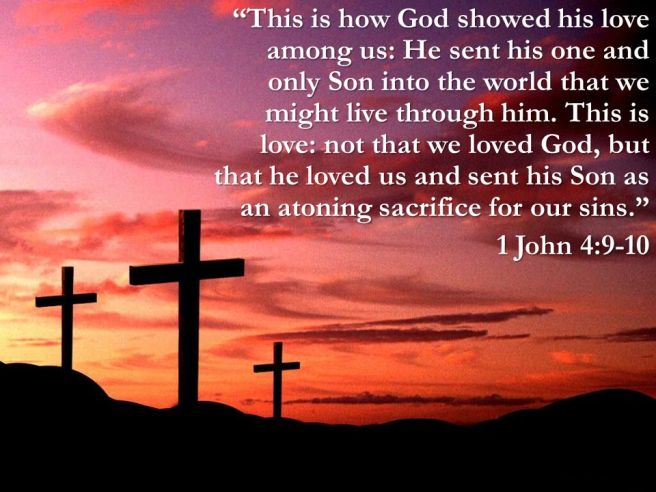
So, God sat down at the beginning of time, and came up with a plan to satisfy His own holiness, His own justice, and appease His own wrath. A perfect sacrifice had to be offered; anything but perfect wouldn’t have been acceptable. So, God sent His own perfect Son Jesus to live a perfect life and to die a sinless death, so that the penalty could be paid for all who would believe in the ages to come. And THAT death was acceptable to God. In fact, because God placed the entire weight of all of mankind’s sin on a His shoulders, and as He died, He took on Himself the penalty of all of mankind who wanted in on the deal (those who would call on Him to save Him). 

His one atoning sacrifice would once for all cover ALL the sins of mankind in eternity past, in the present and throughout eternity future, on ONE condition! A transaction had to occur. The transaction begins with acknowledging our sinful condition and our great need to be rescued from our sin, to escape eternal judgment. A person needs to recognize that Jesus Christ was and is indeed God incarnate. A person needs to believe that when Jesus died on the cross, it was for the sole purpose of paying the penalty for the sins of mankind. Then, one needs to unquestionably believe that He could save them forever from their sins. And finally, a person needs to ASK God to save them. With the confession of our need, our declaration of our belief in Jesus as the son of God and our belief that God would save us because HE promised He would in His Word, the transaction is complete. Upon our acceptance of that legal deal, our names are written into the Book of Life and can never be removed.

So, does everyone on earth have this gift of salvation? Unfortunately, no. Salvation only belongs to those who in simple faith, believe God and trust Him to save them. The transaction is so simple, a little child can understand it, but a transaction still needs to occur to reap all the benefits of being justified by faith. 

So, what is the beauty of the gospel (which means the good news of Jesus)?

After I am saved, the beauty is that Jesus gave the Father what He wanted from me, which I could never give Him. Perfectness.  Jesus offered HIS perfectness for ME and God the Father accepted that sacrifice for ME! I trusted Christ as my personal Savior completing this transaction for me at the tender age of five. But, I admit, it took years to fully understand the ramifications of that transaction on my life in Christ! But the fact is that once you accept Jesus’ sacrifice and become a child of God, God says “your life is finally enough to please me” because God gave HIMSELF all that He demanded from me through Jesus. God the Father is pleased with Jesus’ sacrifice and has forever made peace with us.

Once we are saved, will we finally be perfect? 

Do any of you know any perfect people? No! None of us are perfect. Why? God didn’t take our sin natures away! He simply forever pardoned us for all our sins. He used His own righteousness to cover our sinfulness. But we are still plagued with these dumb sin natures that make mistakes every single day! But, unfortunately, it doesn’t stop us from trying to chase down and achieve a state of righteousness in and of ourselves.

Doesn’t God want us to do what is right? 

Yes! Absolutely YES! Does He think we can ever reach His righteous standard? NO, Absolutely NO!

But the irony is: Before salvation, we needed Christ to save us BECAUSE we were sinners. He didn’t make us righteous first so that He could save us. He saved us to redeem us back and apply Jesus righteousness to us. He saved us so that HE (not us) could make us righteous in the Father’s eyes!

So, why do Christians have this misconception that AFTER salvation, we can make now ourselves righteous with our own attempts when we could not BEFORE?

The Bible reminds us, “The heart is deceitful above all things, and desperately wicked; who can know it? I, the Lord, search the heart.” (Jeremiah 17:9-10a)

It does NOT say, if you try hard enough, you can make your heart ‘better.’  To believe that you can actually make your unrighteous heart righteous is actually refuting what the Bible says, “All have sinned and fallen short of the glory of God.” (Rom 3:23)

In fact, while we are trying to become better and better, we may actually be sinning in order to attempt to arrive there. And here is how: It is actually a sin to attempt to justify ourselves, trying to self-fulfill our own self-righteous perfection. Another word for self-righteousness, self-fulfillment, self-achievement, is PRIDE! And pride is sin. In fact, pride is one of the very things that God specifically says He opposes.

James 4: 6 “God is opposed to the proud but gives grace to the humble.”

So, while we are trying so hard to become perfectly righteous, we are actually doing it the opposite way of how God says will please Him. (stay with me-I’m getting there) 

So, what is the “will of God” then if it isn’t becoming more and more perfect / more and more righteous? 

530A0AC6-000F-4550-81B6-BD0662219831

Contrary to what we’ve learned, His word says that God draws near to those with a broken and contrite heart (NOT a heart who is becoming more and more perfect, more and more confident, more and more strong, more and more put together, more and more self-controlled or more and more sinless). This is really important: Listen! 

Ps. 51:17 “The sacrifices of God are a broken spirit, A broken and a contrite heart— These, O God, You will not despise. 

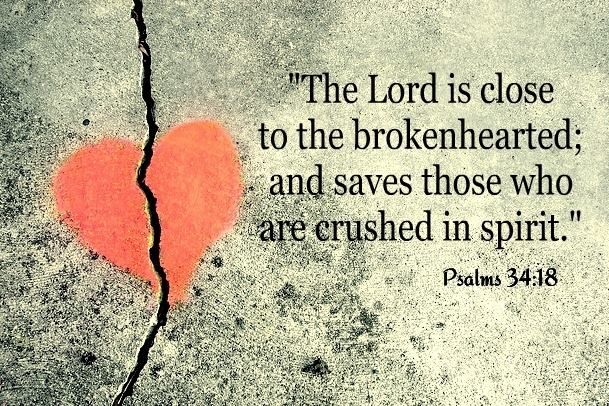
Ps. 34:17-18 “The righteous cry out, and the Lord hears, And delivers them out of all their troubles. The Lord is near to those who have a broken heart, And saves such as have a contrite spirit.” 

Doesn’t God want us to obey His commands and attempt to do better?

Just because there are commands in Scripture that tell us how God wants us to live doesn’t mean that DOING those things make us any MORE righteous, or that God is MORE pleased with US when we do them. The truth is: there is NOTHING we can do that will make us MORE loved or cherished by God. 

The truth is: there is NOTHING we can add to the righteousness of Jesus that God has not already attributed to us by His son’s death on the cross that can make us MORE righteous.

There is nothing WE can do that makes God take notice of us and have a special affection for us because we are good, “Wow, THEY are pretty special (THEY are such ‘GOOD girls’) because THEY are living life so well.” But we also don’t have to worry that God thinks poorly of us when and if we don’t live sinlessly, because Jesus has already accomplished all the perfect that was required to be accomplished on our behalf.

Why do we want to achieve idealistic righteousness of any other idealistic dream anyway (besides possibly just being proud of ourselves or making others proud of us)? Because we want to be accepted by others. Because we want to please the ones we love. Because we don’t want others to point their fingers at us and condemn us for being bad. We want to be easy to love. We want to be treated with compassion, kindness and tenderness, and not accusations and condemnation. 

So, if we are achieving these things so that we will be loved, accepted, and treated with kindness, then aren’t we simply desperately trying to ultimately achieve what God has already given us?  And if the method we are using to achieve them with (self-fulfillment, self-reliance, self-righteousness) is going to push God away, aren’t we just shooting ourselves in the foot, meaning we’re doing everything that God Himself says He will oppose?

Rather than aiming for the ideal end result, maybe we should be more concerned with the method that brings God running to us, our hearts in love with Him. 

“1 Samuel 16:7 (NAS): for God sees not as man sees, for man looks at the outward appearance, but the Lord looks at the heart.”

Sometimes, I don’t think we trust God to really know our desires to please Him. We believe we have to SHOW Him with our perfection. However, if we are honest, we discover we just can’t ever be perfect. But through humility, with honest authenticity, when we acknowledge to Him that we are weak and often broken, and contritely acknowledge the truth that we are indeed imperfect, that is when God comes running to us to show us mercy and compassion. 

Matthew 9:13 (NAS): But go and learn what this means: ‘I desire compassion, and not sacrifice,’  for I did not come to call the righteous, but sinners.”

You see, LEANING INTO our weakness and imperfection throws the door wide open for God’s mercy (compassion) and grace. PLUS, His GREATEST joy isn’t experienced in OUR triumphs, but He is glorified more when HIS own attributes glorify HIMSELF, not when we try to replace His perfection with our own. (Carefully examine what God says here! …When I (God) have been made happy by MY actions.

Ezekiel 20:43-44 “You will look back on all the ways you defiled yourselves and will hate yourselves because of the evil you have done. But you will know that I am the Lord, O people of Israel, when I have honored MY name by treating you mercifully in spite of your wickedness.

Are we embracing the world’s definition of success — or God’s definition of success?

I John 2:15-17 “Do not love the world or the things in the world. If anyone loves the world, the love of the Father is not in him. For all that is in the world—the desires of your flesh and the desires of your eyes and the pride in your life—is not from the Father but is from the world. And the world is passing away along with its desires, but whoever does the will of God abides forever.” 

4A02955F-07B0-4BD7-89A5-899BA39E7BA4

Is it possible that all of our aspirations that we women have spent our whole life trying to achieve have been driven by self-reliance which we learned would prove us to be “good girls” and that would make others happy and proud of us? Isn’t another word for self-reliance and self-fulfillment of something you want more than anything else in life, just another word for the “pride of life”  which says “I can do it myself?”

So, I guess what we all have to ask ourselves is, “Do all of our high expectations for ourselves even please God? Or is it possible that most of our high ideals are really about making us feel good about ourselves? Looking good to other people? Earning people’s favor? Worrying about other people’s expectations? Etc.”

Another lie we believe is that our high ideals and expectations are actually realistic goals. They are NOT! God never promised you can achieve everything you want to achieve! The world might have told you that, but God never did. You can climb that cliff and climb that cliff and climb that cliff but if the cliff is not climbable, you are only setting yourself up for failure.

My dear sisters, do we realize that there has never been a perfect mom? There has never been a perfect marriage. There has never been a perfect home. There has never been a perfect bank roll. There has never been a perfect body. There has never been a perfect friend. And there has never even been a perfect Christian. (Gasp!)

If you set an impossible ideal in front of you as your goal (perfect mom, perfect wife, perfect Christian, whatever it is), you will ALWAYS end up feeling defeated. You will ALWAYS fail. You will NEVER attain that wonderful elevation of yourself having arrived at the life of your dreams. The only possible outcome for all those unrealistic idealized expectations is failure. And failure is the one thing we don’t want! Am I right?


My husband, a firefighter, told me recently about a call his crew had gone to. A woman had fallen down a flight of stairs. While the firefighters urged her to go to the hospital to make sure she hadn’t broken her back, she was impertinently stubborn. She was determined to get up by herself, and walk by herself, and climb those stairs by herself because she felt it showed her strength and fortitude. But in reality, it showed her stupidity. She chose self-reliance over acknowledging she was weak, broken, and injured. It is more likely that her valiantly portrayed fortitude, pushing through the pain, probably cost her a lifetime of back problems—all so that she could prove to observers that she wasn’t hurt and that she could do it herself. 

7F7DA50B-42BA-4D40-85F6-8E496F3F9752

We women often do the same thing, pushing through impossible situations, to prove that we can do it ourselves. We’re more like a bunch of two-year olds than mature realistic adults. We don’t want to admit that we’re just plain ol’ everyday humans who can’t achieve all our idealistic goals. We aren’t super-woman! We are afraid to admit our weaknesses and our brokenness! We’re afraid deep down inside that it will prove that we are failures. Ladies, we’re not failures unless we try to pretend to the world that we are winners! That’s unfortunately, when we simply prove our naive stupidity! On the other hand, we prove that we are mature when we can freely admit that we are not everything we wished we were, and that we’re only human, and that we might not ever arrive at any level of perfection, and learn to be okay with that.

Is it even good for us to hold so tightly to all these expectations of success and achievement? What about self-control and righteousness? (To be continued)

Pleasing God: A Paradigm Shift

C0F657DF-42CE-408A-8227-E0C1A2D44F3E

Do you know what a paradigm shift is? It is a change in the way you see something or the method you have become accustomed to doing something. People don’t like paradigm shifts because they cause us to release our death grip on something we’ve always believed was true and consider an alternative viewpoint. What I will ask you to do is to at least consider a paradigm shift in how we’ve all learned to think we can MAKE our lives please God.

Let’s try this illustration:

Imagine that I am a person who loves God and wants to please Him (I am by the way). In my mind, there is only one way to please God. The way I’ve always learned was the only way. Performance! (Good behavior, good thoughts, outward righteousness). The only way to please God is to do a righteous deed. So, determined to please God, I head through that door but this time it is locked. Panicked, I keep throwing myself against it. “The only way to pleasing God is through this door,” I think.

You see, we have been taught that in order to please God, we MUST perform THIS way. Ironically, the very way that we are told to please God, our good behavior, isn’t what will please God. God is looking at our hearts. So often, in our very efforts to be righteous and please God, we actually sin, without even realizing it, because we are sinful beings. Scripture says that even our righteousness is like filthy rags. (Isaiah 64:6 (NIV84): All of us have become like one who is unclean, and all our righteous acts are like filthy rags; we all shrivel up like a leaf, and like the wind our sins sweep us away.)

Let me ask you some probing questions:

How often in our desire to please God is it more about how much I am doing for Him rather than how much more He’s done for me?

How good do I feel about MY efforts to please Him?

How often do we expect that He will be impressed with MY love and sacrifice for Him?

Maybe He’ll look down and clap his hands at how much I’ve improved myself today?

For sure, we believe, He’ll look at our devotion and surely that will impress Him.

Of course, I’ll wonder if He thinks better of me today than yesterday when I didn’t do so great?

In the show, Friends, Phoebe is challenged to do a selfless good deed. And she becomes quite frustrated as she realizes that every good deed she attempts has a measure of self-gratification to it (that is, made HER feel good), thus she couldn’t claim it to be truly selfless. What she was discovering is that it is quite difficult to do a good deed without that air of self-righteousness to sneak in—that temptation to pat ourselves on the back. Because even our righteousness are like filthy rags in comparison to God’s righteousness.

So, should we stop trying to please God? No! 2 Cor 5 says, “whether we are here in this body or away from the body, our goal is to please Him.” So, yes, we should all want and try to do the “right thing” but ONLY because we love Him NOT because it has any righteous value to it. Neither does it increase our acceptance before God. And specifically, it is simply the heart of pride that insists I can do better and be righteous with my strength, self-will and self-control.

But, I do want to challenge you to consider whether… what God really intended for us was to please Him differently. As an example, the Pharisees in the Bible took a good concept, trying to figure God out and trying to figure out how to please Him, then created a set of rules by which they could feel good that they were indeed pleasing to God. The irony was that by following those very strict set of rules, Jesus expressed how much their supposed righteousness disgusted him. Ultimately, what’s more important? Whether our actions have the appearance of pleasing God or whether our heart pleases God?

As a way of introduction, let’s all go back and remember our childhood. All of the dreams and aspirations that were planted in our hearts as children (to be the best person, wife, mother, friend, citizen, whatever), were taught alongside learning to be a “good girl,” a good Christian, an acceptable person, and a person whom society would admire. Unfortunately, we were taught that becoming the best we could be was achieved through good behavior. So, as a child, when you followed rules, you were called a “good girl.” If you followed your parent’s rules, you were a “good girl.” It made your parents happy. If you followed your teacher’s rules, you were a “good girl.” It made your teachers happy.

And if you followed God’s rules, doing all the right things, then you were a “good girl” (that is, a good Christian). Because people in our lives were happier with us when we were a “good girl” (parents, teachers, friends), we learned that when we behaved well, it made people happy. So, we came to believe that it must make God happy with us, too, if and when we followed His rule book and when we were successful at it. To be clear, we came to believe that what we DID dictated how happy God was with us.

Where did all these unrealistic expectations of making God happy and everyone else in our lives come from?

94BA7BB0-A600-46ED-9775-C697F6784337

In essence, we learned we could become good at anything we put our minds to:

• if we studied hard, we could be successful at whatever we attempted if we tried hard enough,

• we could win at anything we tried hard enough to achieve when we tried harder than anyone else,

• we could have the cleanest home with just a little more organization,

• we could have a successful, happy marriage by making the right choice and learned compromise and conflict resolution skills,

• we could raise the best kids by just teaching them the right principles,

• we could get along with anyone as long as we were nice,

• we could be healthy as long as we took care of our bodies,

• and we could be financially secure simply by being wise with our money.

We pretty much spent the first 18-21 years of our lives figuring out how to live the life of our dreams and building the confidence, fortitude and self-control to do it, and then…. Well, raise your hands if your life didn’t end up as easy as you hoped or dreamed. Real life didn’t turn out how we’d been led to believe it could have turned out if we simply “tried harder or better” than all the rest.

In all these things, being “good at what we DID” was what defined us as being a “good girl,” that is, who we were. What we DID gave us a feeling of value and self-worth because it made people happy when we behaved correctly. And we were happy when they were happy with us. (As a child, we were dependent on someone else’s view of us). If we were a “good girl,” we were rewarded with praise. If we were a “bad girl,” we were punished with feeling ashamed for what we’d done. Unfortunately, when we grew up and didn’t achieve all our wonderful ideals, we somehow came to believe it was because we must have been a “bad girl,” a disappointment, a failure, because only bad things are supposed to happen to bad people. We were easily ashamed of ourselves. We felt bad. We felt others must be disappointed in us.

So, we came to believe that to be acceptable to God and to others in our lives, we’d have to always be a “good girl” and stay a “good girl,” we’d have to be successful in all of our endeavors, our relationships would always have to be successful and happy, our homes would have to be immaculate and always in order, we would always have enough money to live comfortably, we would always have healthy, fit bodies, and we’d have learned, in time, to overcome our sinful natures and stop doing bad things, by digging in our heels, applying good self control and determination. In fact, without realizing it, we probably came to believe that all those “good girl” things were actually possible to attain if we just tried hard enough! Unfortunately, we were wrong!!!!!

Self-Achievement and Self-Fulfillment is a Learned Behavior

7E477DF7-E107-4225-BFC5-4BBDD69D5F40

Is it possible that all those self-achievement skills we were taught, that good behavior makes a good person, actually inadvertently anchored our childhood hopes and dreams and aspirations in our OWN self-achievement and self-fulfillment. Did our training not reinforce to us that WE are truly capable to be in control of our own destiny? While that might be good for society as a general rule (that is, all actions have consequences), I think it misleads us in terms of what pleases God.

You see, we were taught how to be a “good girl” in the same teaching moments as we were learning other life skills. Our parents were trying to show us patterns for successful living. But attached to those beneficial life skills lessons, we were also establishing our value and our identity. So, as moms, we continue to unknowingly teach our children to be good alongside self-achievement by telling them, “You can do anything you put your mind to.” And… good kids try to emulate what they are told. But they are now attaching value to their behavior.


However, as a general rule, no one told us that weakness and brokenness were ok. Weakness was NOT ok! Brokenness was NOT ok! Winning was better! Succeeding was better! Being victorious was better! Achieving was better! Winners and overcomers and those that avoided negative situations were praised. Losers, incompetence, difficulty and weakness were shamed. Unfortunately, we were also taught that given enough will power, we could perfect our life, our circumstances, our relationships, our health, our homes, our finances, and we could indeed become more and more righteous.

For those of us who grew up in Christian homes, we learned this didn’t only make our parents happy, but when our parents were happy, then we were taught it made God happy. So, we learned that GOOD BEHAVIOR will make God happy. In fact, we were taught that He even EXPECTS us to become more and more righteous (let’s just say, “we believe He wants us to become more perfect”).

Even today, impressionable children are still being told to do everything they can so that they can be be “just like Jesus!” But those poor kids will never be JUST LIKE JESUS! There is no one like Him. He is perfect.

Here’s the Fallacy (the first lie we came to believe)

Is it even possible to become “more righteous?” If you aren’t 100% righteous, then aren’t you unrighteous? Given that standard, is it even possible to become “more righteous?” But don’t we keep trying to become “more righteous?” Don’t we keep hammering our kids with “be more righteous?” Don’t we keep trying to become MORE perfect? Better this? Better that? More, more, more? In fact, have we even considered that God might not even want us to achieve (fill in the blank with whatever your greatest dream or accomplishment is)? Is it even His will that we achieve this “good thing” or that high ideal? Finally, what does God want from us then in terms of doing right, then? I’m going to address that next.

B8C92958-8220-4E8A-AF99-544333655132

Here’s the second LIE that we have come to believe.

This is where it all got distorted. The lie is that our WORTH (our VALUE) comes from behaving or achieving, whether achieving something that someone else wants from me or something I’m determined in my own heart to achieve or what I believe God wants me to achieve. But nothing we do or achieve in our behavior can ever determine our value. Our value is determined by the value God placed on us when He made us in His image (as far back as in our mother’s womb) and on the value Christ won for us on the cross.

But, to be clear, we will NEVER be able to give Him what can ultimately make Him happy or satisfied with OUR behavior. Perfect righteousness is the only thing that can make a holy God happy OR He’d be diminishing His own holiness, His perfectness. That’s why our awesome God came up with a plan, THE CROSS! Oh the glorious rescue from a performance driven life to embrace the significance of the cross! (To be continued)

The Idolatry of Religious Self-Improvement

FED06A67-0AD5-495C-BE6D-B66A32EC9A00

Sometimes I get such a heavy heart as I ache to share what God has done in my life, but the words either won’t come or seem trivial, or offensive, or theologically impertinent. How can I possibly tell you how much Jesus changed this performist’s heart? How can I possibly tell you how God turned my theological world upside down? How can I possibly share the shocking paradigm shift God showed me in the last 10-15 years? 

Like the apostle Paul’s conversion on the road to Damascus, God decimated me so that He could help me see that I wasn’t actually glorifying Him with my spiritual fervor. I was idolatrous of perfection and self-improvement. I was so mistaken to believe that my drive for spiritual self-improvement could make God more pleased with me. I completely misunderstood the life He wanted me to live for His glory. Like the apostle Paul, I thought I knew how I was supposed to prove my commitment to my God and King; I learned how to be a ‘good’ Christian growing up in Sunday School and in a Christian home.  It was all about achievement of a sinless life. It was all about having more self-control. It was all about beating my body into subjection, until I could become ‘just like Jesus.’ I zealously set out to prove myself with my righteous deeds. But in the end, those actions and those attitudes were born out of idolatry to become better, to sin less than others, to achieve more than others, to gain more favor from the Lord.

You see, seeking to become “just like Jesus” is the most offensive phrase to me today.  Because my whole problem began by believing I could become “just like Jesus.” How arrogant and impertinent is that!

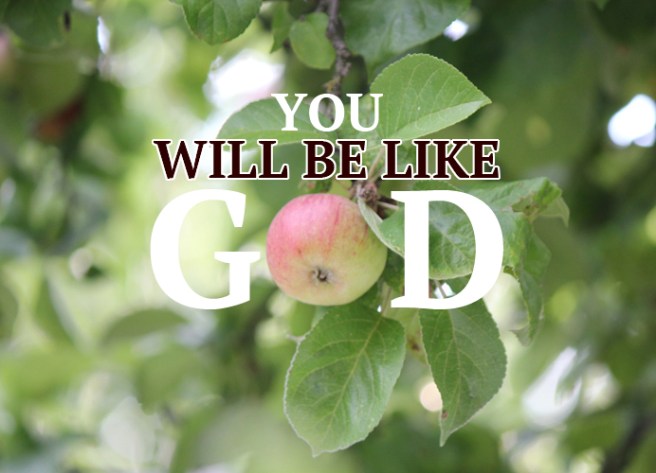
It reminds me of two Scriptures: First, In Genesis 3:5, Satan comes to Eve and tempts her with the phrase, “when you eat of the tree, you will be LIKE GOD.” And in Isaiah 14:14, during Satan’s very famous boast, Satan says, “I will ascend above the heights of the clouds; I will make myself LIKE the Most High.” Friends, there are a lot of Christians who would scoff at the arrogance of the devil, but in their hearts, still think they are pretty good Christians. They believe with all their religious piety, that their perceived righteousness has raised themselves to some level in which God takes note of THEM, “wow, look at how righteous they are!”

3648B5CF-BB42-4006-87FF-2B40FDBFB88B

Although I didn’t know it at the time, more than anything in the world, I wanted God to take notice of ME. I worked hard to earn His favor. Listen, I was already saved. I had already taken care of my eternal security many years before. This was about my idolatrous heart that wanted to become better and better so that I could rest in my perceived belief that God was somehow impressed with ME! I worked hard to acquire self-control. I set very high standards for myself and my family so that we didn’t accidentally fall short in some way. I read my Bible and attempted to implement all the “that shalts” and stayed far away from the “thou shalt nots.” I worked hard to perform in just the way I thought Jesus-followers should perform. But the problem was that I was trying to create a self-improved version of myself. The glory of my life was my achievements. God’s grace and His mercy meant very little to one who thought she was doing pretty good on her own. No, I didn’t worship myself. But I did want more than breath itself to become a better version of myself. And do you know what? As long as I applied a little extra self-control, I could manage to keep that old sinful nature at bay (I thought). I could pursue holy living. I could force myself to adhere to righteous behavior and righteous thinking. As long as I grit my teeth and worked hard enough at it, I felt like I was succeeding. 

But, I believe God, in His kindness, eviscerated me. You see, He knew that I would never feel like I was ‘enough’ as long as all I could see was my SELF and my performance. So, He gave me a devastating illness: DEPRESSION! Depression takes all your desire for life and improvement and satisfaction away. The most crushing thing it takes away is a person’s SELF control (a person’s ability to control what their SELF is feeling and is doing!)! You see, what was keeping me from realizing God’s sufficiency for my insufficiency was MY ability, up until that point, to SELF-CONTROL my life and my actions. I had worshipped becoming ‘better’ but missed the Savior Who had come to rescue me from a life of bondage, the bondage of trying to become as good as God, to earn God’s favor, to be favorited by God (you might even say). I thought that’s what Christians were supposed to do! I thought God would be proud of me for achieving religious improvement! But without realizing it, I had raised that standard of MY becoming ‘better’ above my Savior’s already provided perfection for my imperfect self. My glory was my religious zeal and fervor! It wasn’t in my gracious and merciful Savior, to my shame!

After Paul’s own evisceration on the road to Damascas, he realized his religious zeal was misplaced, too. The God he believed he was serving was actually unhappy with his actions, as religiously zealous as they were. God didn’t strike him down in His anger; He struck him down in His kindness because He had so much He wanted to show Paul about His gracious mercy and what God actually wanted for his life. 

005EF799-541D-460C-B245-5552EF72228C

Don’t you find it ironic, that the religious zealot of Saul, became the apostle Paul that penned these words: “Wretched man that I am! Who will deliver me from the body of this death?” (Romans 7:24) Paul! He calls himself a ‘wretched man’ and he describes in agonizing detail his battle with his sin nature which, though he hated it, kept winning.  Yet, two verses later, he reminds us that there is “NO condemnation to them which are in Christ Jesus!”

In my depression, I lived in the tortuous prison of “wretched man that I am.” There was no possibility of self righteousness. God saw to that, in His mercy. There was no possibility of self-improvement. There was no “take the bull by the horns and better your life by grit and determination” mantras. There was only defeat, disillusionment, despair, and disappointment! Is it any wonder, that when I discovered that I was in the most wretched of situations, that God’s mercy and grace for an imperfect life started to become really important me!? It was like I came to know the Lord all over again. I had learned Him to be a task master and a God of high expectations for me. But I came to know Him in my depression as a gentle shepherd, a loving Father, a tender friend, and a merciful Savior! During my 11-12 years in depression, I finally gave up all my attempts at perfection and at self-righteousness. I came to embrace the truth of my condition, that I was a totally depraved and needy sinner, in desperate daily of God’s mercy for my failures and His grace to even hold my head up some days. 

During God’s surgery on me, I learned to love basking in the tender affection of a Savior toward me, a saint who had NOTHING to offer Him but my brokenness. I had nothing left to show Him of my merit. While my view of mySELF decreased, my view of HIM increased. (“He must increase while I must decrease!” – John 3:30) The effect of unmerited favor powerfully drew me into His heart. I longed to be loved like that. I longed to lay down my burdens, battle worn and weary, and feel love like I never had before. It felt so unnatural to know I was loved so deeply when I felt so unworthy! I was so surprised to find such satisfaction in being loved without having earned it. 

The way God kept me alive I think, during such darkness of my heart, was to teach me to cling to Him and His righteousness in spite of my unworthiness! He taught me to fight the darkness with this truth: God passionately loves me in spite of the continued darkness of my heart. He passionately longs to show me how all the things that showed me how depraved and unworthy I was were already settled in the debt He already paid! There was nothing left He needed me to do to prove my worth to Him.  My worth was determined when Jesus died to take away the penalty for my sin (my ugly, depraved life). He made me a child of God, which gave me infinite unmerited affection from my loving Father. And until God eventually removed my depression in 2014, that unmerited affection for one who felt short of feeling ‘enough’ had to be enough for me. Chronic, miserable, devastating imperfection would have to be enough for me because of one redeeming truth: God loved ME as I was! Imperfect, sick, without the ability to act righteously, without the ability to think righteously, but redeemed, loved and cherished! What a treasure He was to me!

Many who hear my story think I am callously promoting lawlessness. It couldn’t be further from the truth. “God’s word says that man looks on the outward appearance, but God looks at the heart.” I love my Savior more than these pathetic words could ever express and I wouldn’t choose to hurt Him. If I could, I would remain sinless the rest of my life. But God didn’t make us sinless when He saved us; I suppose He could have. But if he had removed our sin natures, why would we need Him!? Why would we be so amazed by His grace and overwhelmed by His mercy when we failed? He left us with our sin natures so that we would sing of His amazing grace for our continued imperfection. He left us desperately needing Him. He left us longing for redemption from these miserable and yes, even sick, bodies. He left us craving His perfection for our imperfection. He left us here in our sinful world so that we would consider HIS GLORY more important and more precious to us than our own successes and perceived goodness.

7E07BD83-120D-4278-AA06-850BC78D1C3ADo you see it? Do you see how much God wants us to be amazed by HIM!? By HIS love? By HIS kindness? By HIS grace? By HIS mercy? Friends, this Christian life isn’t about OUR SELF IMPROVEMENT at all! Our job  in this life is to show forth the glory of HIS grace! Our job is to be daily amazed by His incredible perfection and glory and to shout it from the rooftops! 

When your desire to self-improve ultimately brings glory to YOU, you steal God’s glory! You elevate yourself to become ‘like God.’ So, while we should never seek after lawlessness, we should never, EVER, EVER stop being amazed by His incredible love and undeserved kindness! 

When you fail in this Christian life and sin (which you WILL do!!!!!!!!!), take heart because God’s love never fails. When you stop and think how kind God is to love a miserable wretch like you, you demonstrate your utter dependence on His daily grace bestowed upon you and you reiterate your desperate need for Him. When you are content to rejoice in your Savior’s glory and perfection in spite of your brokenness, you demonstrate, “You must increase, and I must decrease!” You demonstrate, “whom have in heaven but You!” You demonstrate, “Your mercies are new every morning.”

You see, while the Christian community to this day, is yelling from the rooftops, “become better versions of yourself!!!! It’ll make God happy!!!!” I’m cringing!!!!! For in my drive to become better, I took my eyes off Him and set it upon myself!  So, for me, (this is MY story), getting better, doing better, thinking better, behaving better were all seeds to my idolatry. ‘Getting better’ made me believe I could actually become better – this depraved, sinful soul. (The Bible says, “There is NONE righteous, NO NOT ONE!!!!”) I was disillusioned to believe that my sinful depraved heart could achieve a particular holiness that God would count as HOLY! God cannot call ‘righteous’ anything that is not 100% righteous!!!! And there is NO WAY for even Christians to be 100% righteous! The only reason He can be pleased with us at all is because of one thing: Jesus, His son, did everything to compensate for my sinful condition, and bring me into a right standing before Almighty God. He did this for me at salvation, but He does this every single day that I remain unrighteous. For anything that isn’t 100% righteous, God calls unrighteous! 

412AF8B5-37E9-47A7-97EB-C81027BFF7B7

So, when I sit in church and listen to a preacher pound the pulpit and tell me I need to do better, think better, make life changes, have more self control, make better life choices, and the list goes on, so I can make Almighty God ‘happy,’ my spirit revolts. When I read Christian pop stars self-improvement memes about making choices to just overcome difficulties and get busy improving your Christian life, I just scream! Because for me, those powerful self improvement messages sent me head long into the idolatry of self-worship. As righteous as those exhortations might sound to the Christian community, they tempt me to start wearing the crown again.  They tempt me to believe that I can achieve everything my heart desires. They tempt me to believe I am the author of my life and the captain of my ship. I’m not! God is the captain of my ship, and I pray that I will never steal the glory from Him again nor seek validation from Him for my righteousness that doesn’t first come from a systemic love for my Savior.

You see, His grace perfects me day by day, but not by my digging down deep and making choices to perfect myself. God, Himself, is sanctifying me because I love Him more than breath itself and He’s restored to me a right mind with which to respond to His promptings. Praise God! His Spirit working in tandem with my spirit longs to show Him my love, but yet, I choose to remember to wholly embrace the fact I’m still a wicked sinner. You can’t magnify the Lord for His incredible grace and kindness without first being intimately aware and disgusted by your own depravity and shortcomings. But it is that very depravity that should leave you running headlong on a straight path to the protection of His mercy and kindness. And there, my friends, God will have you right where He wants you, needing HIM. Glorifying HIM! Magnifying HIM! Thanking HIM! Praising HIM! 

Friends, there is nothing more freeing than learning to become wholly dependent of Him for His righteousness! NOTHING! No more striving! No more beating yourself up! No more self-flagellation! No more lying to yourself as you attempt to show the God of the universe your pathetic attempts at righteousness. No more trying to fool the world around you into thinking you are more righteous than you are! Just stop! You are seeking self-adoration. It may be religious thinking, but make no doubt about it, it is still sinful! It is quite  possibly even idolatry.

So, here’s my story: My sin was rooted in my drive for perfection, but my redemption was born out of my brokenness! That blessed brokenness, which was so painful to me for so many years, was what took my eyes off of myself, and placed it wholly and completely on the only One worthy of my affection, my LORD and Savior, Jesus Christ! And friends, that is Who should get the glory. Yes, that puts a lot of the emphasis on God and very little on you. That’s exactly where the emphasis should have always been, all along. God says, He is our ‘enough!’

F7705E2D-4DC2-4FA4-973B-97C06A7D73B7

So, I will never cease to glorify my Savior. I will not (I can not) become enchained to this idea of self-improvement or self-achievement. My only glory will always be God’s amazing love for me and my undeserving life. And my life has never been happier. I have never felt more freedom. I have never felt as loved as I do today. I have never felt freer from the shame and condemnation of failure. 

I wonder how many Christians would benefit like I did to living with depression. How many of God’s people would consider HIS works on our behalf more amazing than their works on His behalf. Not because of their successes, but via the path of their failures. How many of His children might sit there reading this article on their phones and laptops and begin to bawl like I am now because they finally discovered what they were searching for all along, the relentless, passionate love of God, even in the face of their failures and in SPITE of their brokenness?! How I want this gift for you!!! Embrace His grace and mercy for your imperfect life!

As a final note, if God has allowed you the devastating illness of depression, could I offer you a possible suggestion? Might He want you to make MORE of HIM than you make of yourSELF!?????? He may not heal you but if you learn the love and mercy and grace of your amazing Savior, it might make the journey more bearable. It did for me. God’s grace and peace to all of you.